Grandma Margaret
Told by Alice
Transcript
- My grandmother Margaret was born in 1940, in Hebden Bridge.
- She married Arthur in 1962, the spring after he came home from sea.
- My father, Thomas, was their first child. He was born in 1968.
A family tree for the stories behind the names
Record a grandparent remembering. Saga Book writes down what they say, keeps their voice beside the words and suggests the people, dates and places they mention. You decide what joins the tree.
Most of us can name a great-grandmother and the town she came from. Far fewer can say what she sang while she cooked, why the family moved, or who is standing beside her in the one photograph that survived.
Answers like these are rarely written down. They live with the people who were there, and they come out at the kitchen table, on a long call, at the end of a visit, when somebody finally thinks to ask.
Saga Book is made for that moment. Press record, let them talk, and keep every word where the whole family can find it.
A tree is a list of names until somebody tells you who they were.
Record a story on the spot, upload a recording you already have, or type it in. Saga Book writes down what was said and keeps the audio beside the words, in English, French, Ukrainian or Russian.
Sit down with a relative and record, bring in a recording made years ago, or write the story yourself.
The recording becomes a transcript you can read and correct, with the audio kept beside it, so any passage can be heard again as it was told.
Saga Book reads the transcript and suggests the people, dates, places and relationships it mentions, each with the sentence it came from.
Accept a suggestion and it is added. Reject it and it is not. Try it on the story on this page.
Search every recorded story. A result opens the transcript at the passage where the words were spoken.
Told by Alice
Transcript
The recording, the transcript and the suggestions on this page are illustrations. The family is invented.
Your tree begins with you. Add parents, partners and children directly, and the family is drawn as an oak that grows with it. Pull back to take in several generations at once, or move in close to read one life.
The more people you add, and the further back they go, the more the oak grows.
A young tree
Import a GEDCOM file from another program, review everything it will add, then add it. Export your tree as GEDCOM 5.5.1 whenever you like.
Every change is written into the tree’s history. Undo a change, restore a person who was removed, or merge two records of the same person.
Tell the assistant what is wrong. It shows exactly what it would change and waits for you. Nothing is applied until you agree, and the change goes into the history like any other.
Illustration
Margaret was born in 1941, not 1940.
Margaret Whitfield, year of birth
19401941
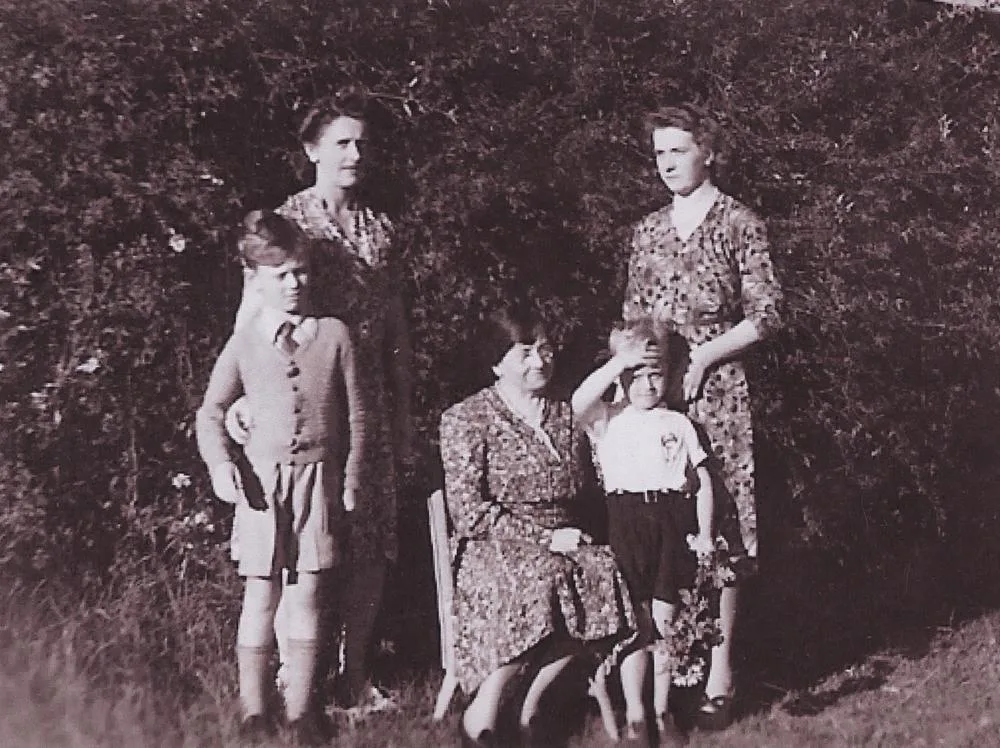
Keep the family’s photographs and video beside the tree. In a group photograph Saga Book finds the faces, suggests a name when a face looks like someone already named, and lets you mark a face it missed.
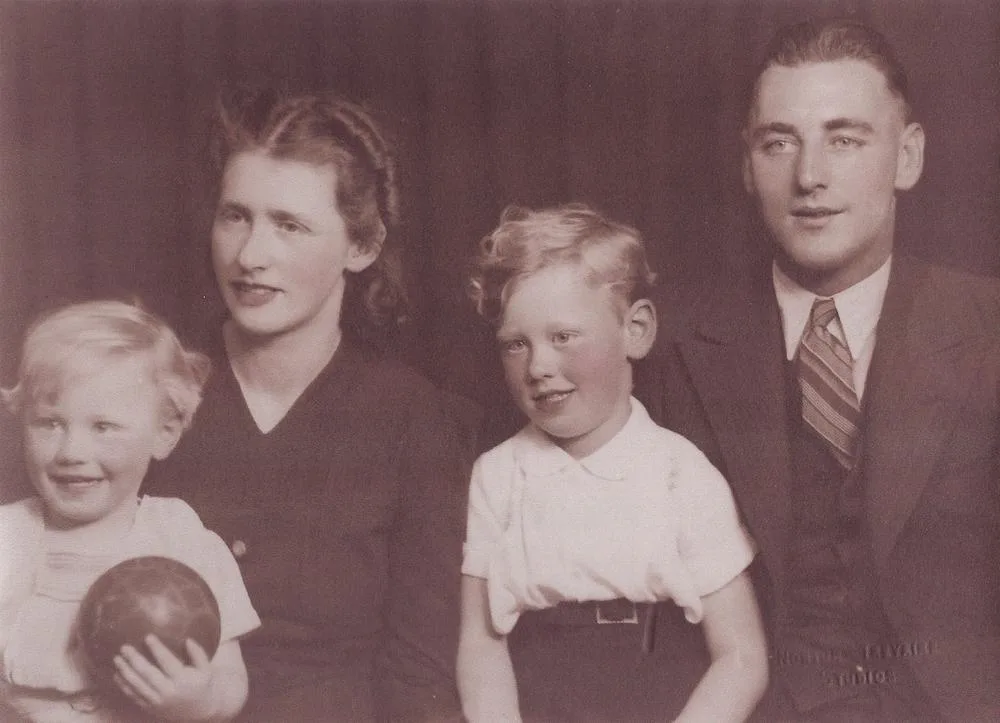
Portrait on the tree
James
A named face can become that person’s portrait on the tree.
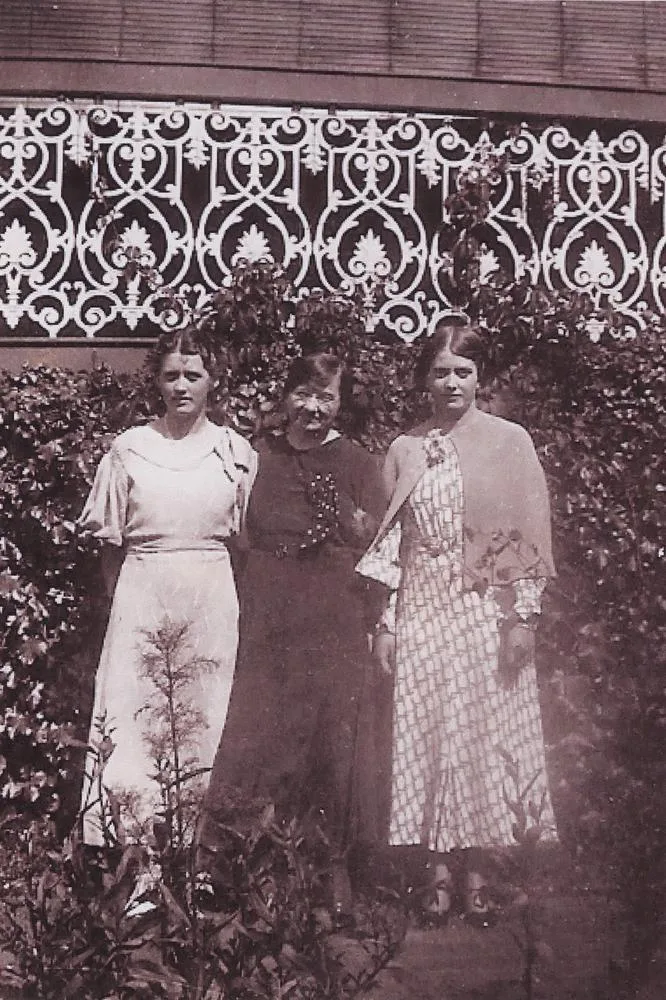
Faces are found and matched in your browser, on your own device. No photograph is sent to a remote AI service to be recognised.
Choose a person and the relatives around them, a template and a paper size. Approve the preview, and the PDF you receive is drawn from the poster you approved.
Prefer your own design? Saga Book supports custom poster templates too.
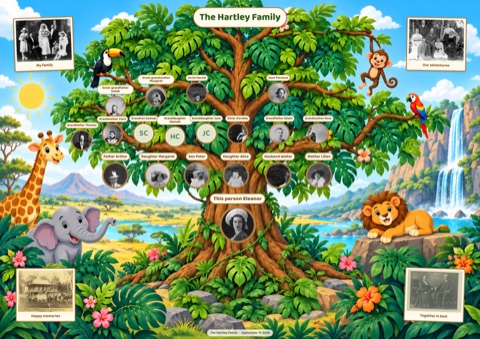
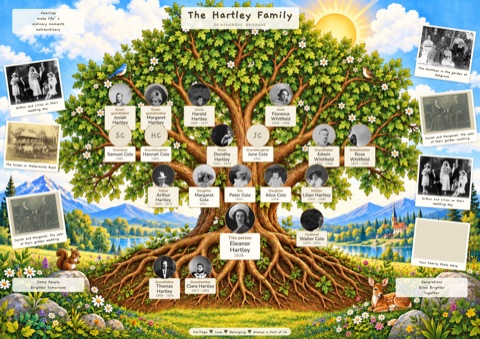
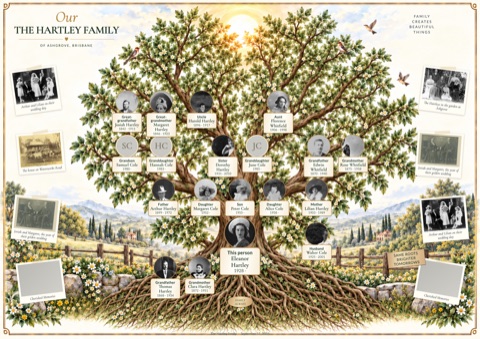
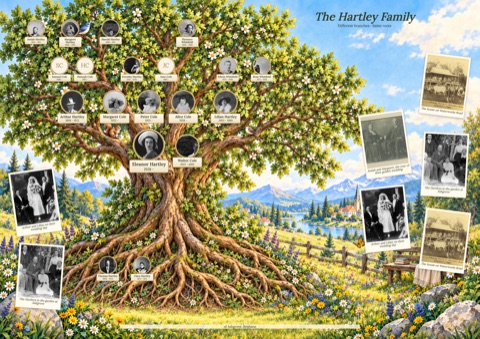
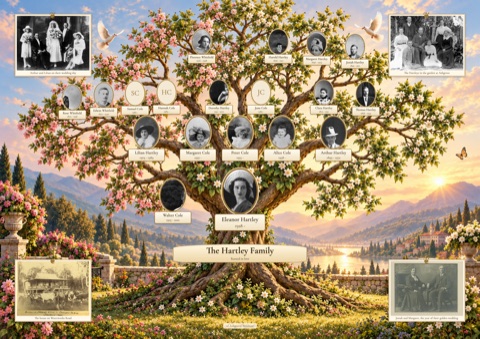
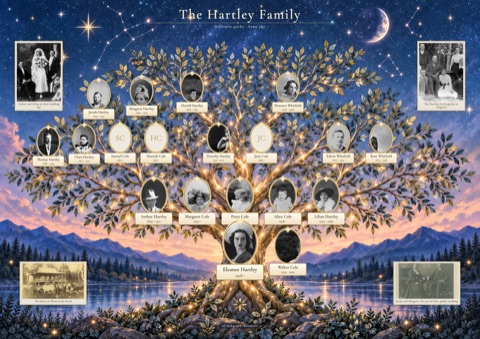
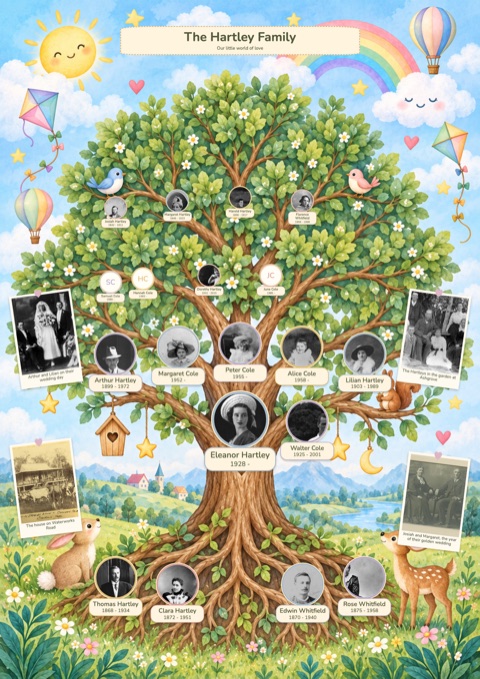
Real Saga Book templates, shown with a sample family.
A family’s history is made of details that matter to someone. Saga Book is built around a few rules it keeps.
Suggestions from a story wait until someone accepts or rejects them. A correction from the assistant is shown before it is applied.
Every change is kept in the history, so a mistake can be undone and a removed person brought back.
Faces are found and matched on your own device, not by a remote service.
Export the whole family as GEDCOM 5.5.1, the format other genealogy programs open.
English, French, Ukrainian and Russian, across the interface, the recordings and the transcripts.
An invitation belongs to one email address, and a relative given one branch can change that branch and nothing else.
Everything on this page is in Saga Book today.
The end of this page, and the first of yours.